

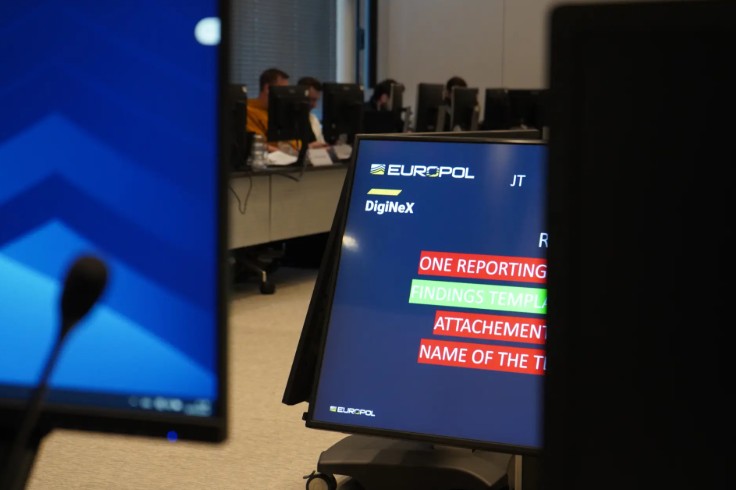
On 18 and 19 March 2026, Europol hosted a digital action day under a dedicated Joint Team targeting migrant smugglers operating along the Central Mediterranean route. More than 30 experts from Germany, Italy, the Netherlands, Spain, the UK and the Office of the Prosecutor – International Criminal Court (OTP-ICC) took part, together with Europol and online investigators from the Europol-coordinated DiGiNeX network.
The operation focused on ten main targets prioritised by the authorities involved in the investigations. By combining their expertise and operational capabilities, the partners shared intelligence and came together in a focused open-source intelligence (OSINT) exercise to support ongoing investigations into the key organisers behind dangerous smuggling journeys through Libya to Europe.
Investigators analysed 251 identifiers linked to the targets resulting in over 1 500 investigative leads. These include usernames, email addresses, system-generated identifiers, social media accounts and companies directly connected to the suspects.
Targeting the most violent networks along the Central Mediterranean route
The networks targeted by the Joint Team are responsible for smuggling migrants from African but also Asian countries to camps in Libya. There, migrants are frequently subjected to systematic patterns of violence and exploitation. Some of these acts may be qualified as crimes against humanity or war crimes and as such fall under the jurisdiction of the ICC.
Smugglers often extort migrants and their families, demanding additional payments under threats of violence to allow further passage across the Mediterranean. After arriving in Italy, many migrants continue towards other European destination countries, including Germany, the Netherlands and the UK.
Joint Team strengthens coordinated response
The Joint Team was established in 2018 as a cooperation framework between judicial and law enforcement authorities from several countries, as well as later the OTP-ICC. Its aim is to enhance intelligence sharing and coordinate operational efforts to combat migrant smuggling from Libya to the European Union via the Central Mediterranean route.
The Joint Team focuses on collecting, sharing and analysing information on criminal networks involved in serious crimes against migrants along this route. Tens of thousands of migrants travelling from the Horn of Africa through Libya to the EU are believed to have been victims of trafficking, exploitation, violence and extortion. The ultimate objective of the Joint Team is to bring perpetrators to justice and end the impunity surrounding these crimes.
The Joint Team includes judicial and law enforcement authorities from Germany, Italy, the Netherlands, Spain and the United Kingdom as well as the OTP-ICC. While not a formal signatory, Europol supports the initiative by providing operational expertise, analytical support and secure information exchange services within its mandate.
New Europol centre reinforces support against migrant smuggling
Migrant smuggling remains a key criminal threat for the EU, requiring coordinated action across the entire criminal chain – from recruitment and transit to the financial flows that support it. Europol supports investigations through a data-driven approach, enhancing cases provided by national authorities with operational analysis and expertise. Europol also facilitates information exchange and coordinates joint operations to disrupt criminal networks.
To strengthen Europol’s efforts to combat migrant smuggling, Regulation (EU) 2025/2611 was adopted in December 2025. This new EU legislation underscores the importance of addressing migrant smuggling at the EU level through enhanced cooperation, including the establishment of Europol’s European Centre Against Migrant Smuggling (ECAMS) in March 2026.
ECAMS ensures better systematic exchange of information and coordination of efforts. This includes strengthening expertise in OSINT and financial investigations, as well as enhancing the operational impact of the network of liaison officers from Frontex, Eurojust, and the Member States.