

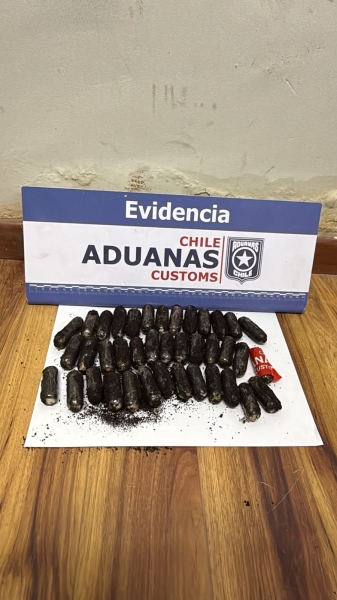
The findings correspond to cocaine base, cocaine hydrochloride and ketamine, which were transported through false bottoms in suitcases and different methods of concealment, even attached to the body.
Three new procedures carried out by officials of the Antofagasta Regional Customs at the Ollagüe Border Complex allowed the detection of more than 7 kilos of different drugs, corresponding to cocaine base, cocaine hydrochloride and ketamine.
The findings were made during the last few days and reveal different methods used to try to hide the substances, from modifications inside luggage to transport systems attached to the body.
In one of the operations, customs officials discovered two suitcases with false bottoms designed to conceal drugs. One suitcase contained 2.685 kilograms of cocaine hydrochloride, while the second contained 2.195 kilograms of ketamine. Both operations involved Bolivian women.
Three days later, another inspection detected 1 kilo 573 grams of cocaine base that was being transported using a concealment method attached to the body of a passenger, also of Bolivian nationality.
Finally, based on risk profiles and the application of various techniques, an inspector conducted a check and inspection of a passenger who arrived at the Ollagüe checkpoint. There, she determined that the traveler was concealing a package under her clothing containing 39 ovoids, the contents of which, after applying the corresponding field tests, tested positive for cocaine base paste, weighing 555 grams.
The proceedings were placed at the disposal of the Public Prosecutor’s Office and the people involved were detained to continue with the corresponding proceedings.
The Regional Director of Customs in Antofagasta, Francisco Romero Papasideris, highlighted the teams’ ability to confront the different methods used to conceal illicit substances.
“These procedures show that those attempting to smuggle drugs are constantly seeking new ways to conceal them. That’s why the ability of our officers to recognize situations that deviate from usual patterns and to intensify controls when necessary is crucial. In these cases, we find drugs in false bottoms of suitcases and concealed on the body.”
These results add to those obtained in recent days by the Antofagasta Regional Customs Office at its various checkpoints. Among them are two operations carried out at the Ollagüe Border Complex that led to the discovery of more than 809 kilos of cannabis hidden in tanker truck tanks, as well as the discovery of US$36,300 in cash inside an international bus, and another operation that resulted in the seizure of more than 30 kilos of cocaine and cocaine base after analyzing images obtained using a scanner truck.
The results reflect the ongoing inspection work carried out by the Antofagasta Regional Customs to detect drugs and other illicit goods at the various points under its control.